
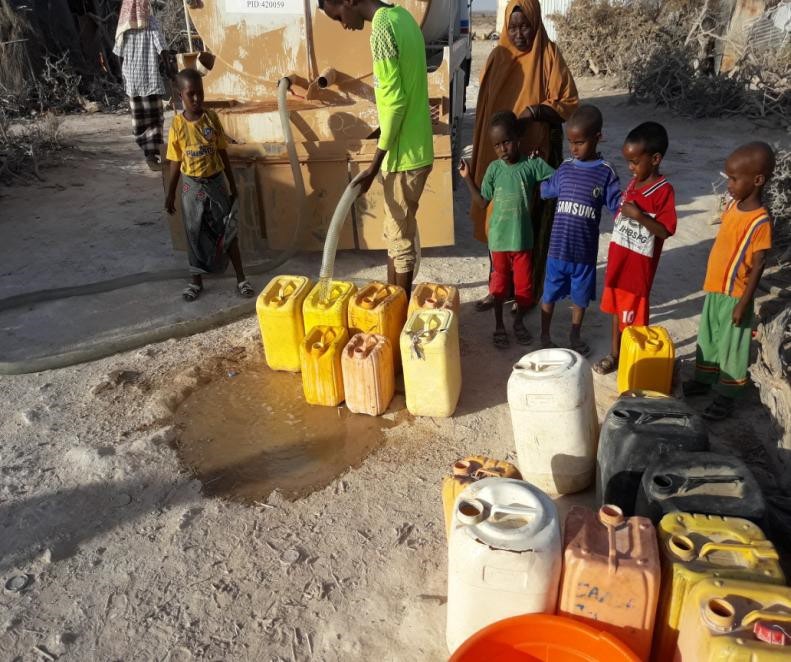

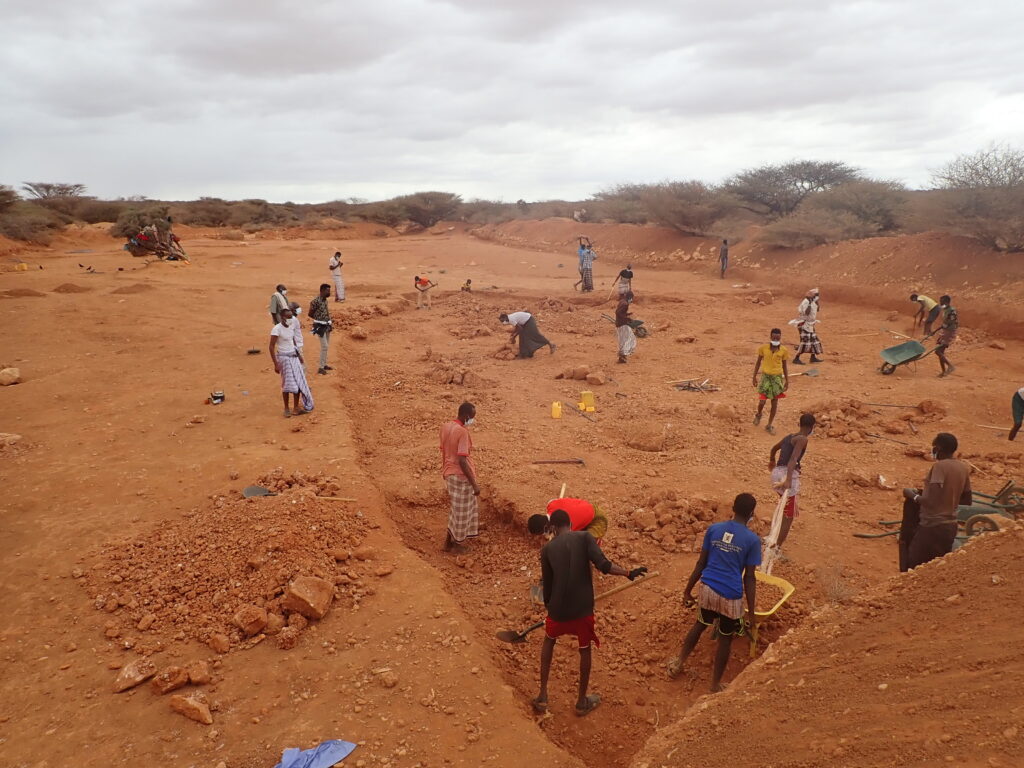
Community life in drought-affected Mudug — the backdrop against which SORDO’s FAO-supported livelihoods work in Jariiban took place.
Through its FAO-supported Climate-Resilient Food Security & Livelihoods project, SORDO reached 650 households directly and a further 3,900 indirectly across five villages in Jariiban District, Mudug. The design combined unconditional cash transfers, which stabilised household consumption during the drought, with cash-for-work on the community infrastructure that determines whether pastoral livelihoods survive the next dry season.
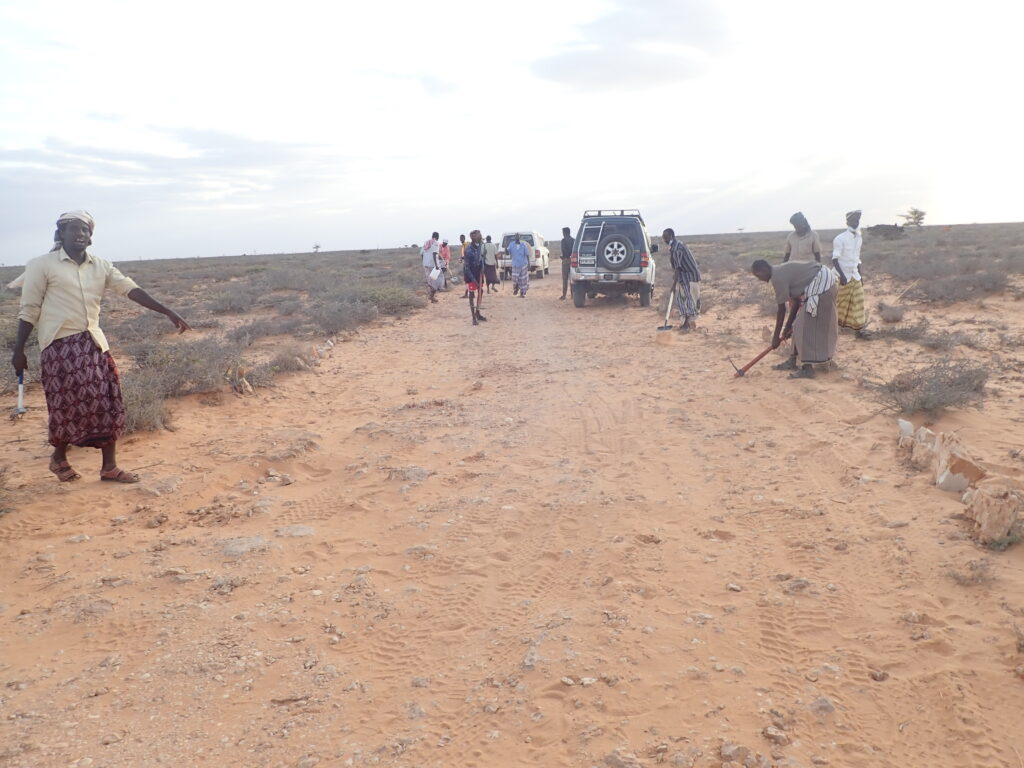
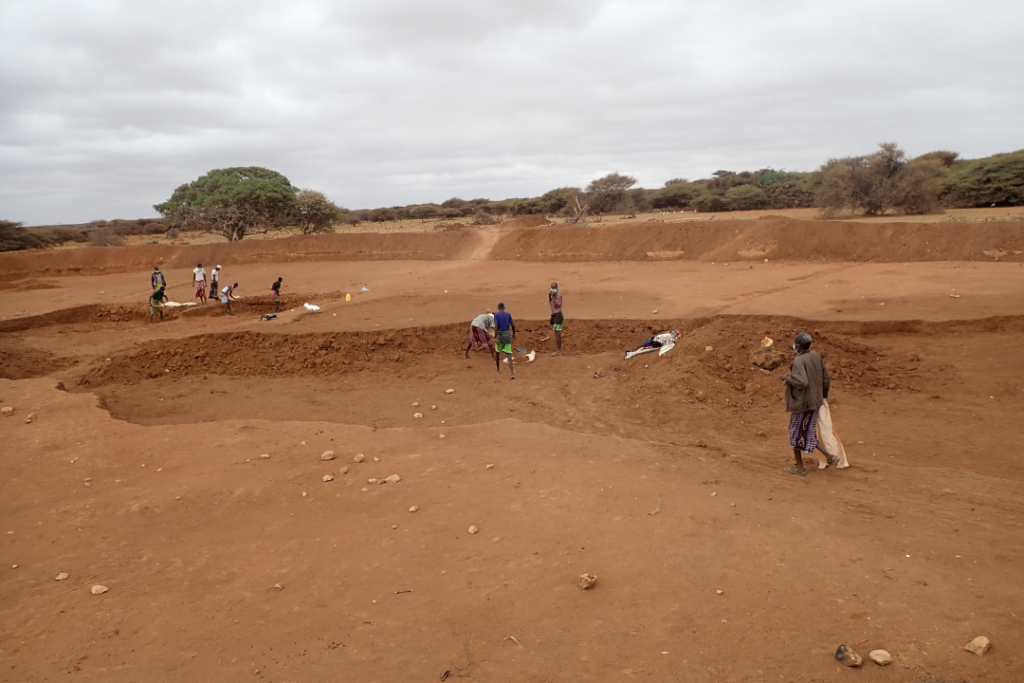
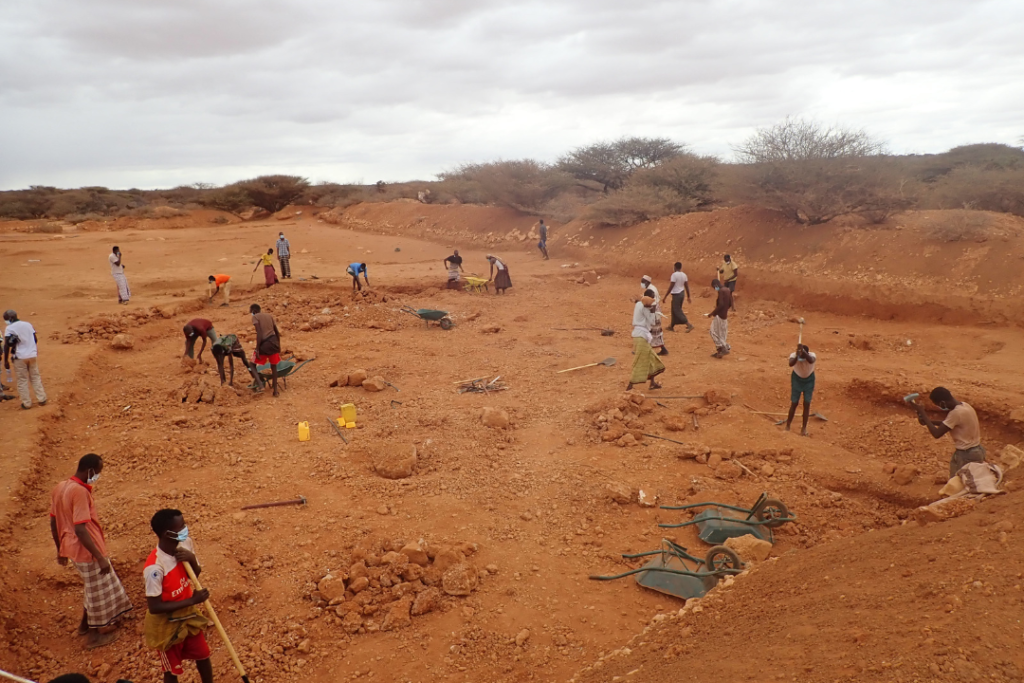
The project rehabilitated three water catchments, restoring 10,563 cubic metres of water storage for 1,100 pastoral families; cleared 77,184 square metres across two feeder roads; and constructed 2,394 cubic metres of contour bunds to slow runoff and hold soil on degraded slopes. Livestock feed and veterinary treatment reached 700 households and 7,000 head of livestock. Half the fifty members of the project’s water management committees are women — governance that outlasts the funding cycle.
Delivered
| 650 Households reached directly; 3,900 indirectly | 10,563 m³ Water capacity restored | 77,184 m² Feeder road cleared | 7,000 Livestock treated |
From the field
Ali · pastoralist. Joined a SORDO–FAO team to rehabilitate a broken berkad near his village. The restored structure now supplies water for more than 80 households and their livestock.
Halima · Mareer village. Used her cash-for-work earnings to support her family and led community tree planting. The road clearance she worked on cut local transport costs by 40% and reopened market access along the Jariiban–Garacad corridor.
Fartun · displaced youth. Trained by SORDO, she now manages a drought-resilient seedbank feeding 25 families and mentors other displaced young people in agroecology.